
For most sessional and full-day services, the Early Childhood Care and Education (ECCE) programme is the single biggest line in the funding mix. It gives children a free preschool place — and gives owners a set of rules with very little give in them. Enrol a child a week too early, start them on the wrong weekday, or let an ECCE-tagged session slip through unfunded, and you've either lost capitation or created a problem the platform will bounce back to you.
The September scramble is real. Here's how ECCE fits together, and how to take the stress out of it.
What ECCE covers
ECCE provides free preschool for eligible children: typically three hours a day, five days a week, over a 38-week programme year that runs alongside the school calendar from September to June. Children can usually avail of up to two programme years before primary school, once they meet the minimum age on the relevant date. Providers are paid a capitation amount per enrolled child rather than charging the family for those hours.
The rules that trip people up
ECCE has hard edges that the official platform enforces, so your own records have to match:
- Eligibility is date-driven. A child must reach the minimum age by a set point to start a given programme year. Too early and it won't be accepted.
- Enrolments align to the week. In practice, terms start and end on specific weekdays — not "whenever the child happens to begin."
- A child is in one ECCE year at a time. No double-enrolment, and whether it's their first or second year matters.
- The 38 weeks aren't your 38 weeks. Your closures and bank holidays have to be reconciled against the programme calendar when you plan attendance and capitation.
Miss one of these and the cost is either a rejected registration or a capitation gap you only spot when the numbers don't add up.
Where ECCE really bites: everything at once
ECCE on its own is manageable. ECCE alongside NCS and private hours is where preschool managers lose their evenings. A typical child does an ECCE session in the morning and NCS-funded or privately-paid hours in the afternoon. Getting their bill right means cleanly separating the ECCE-funded session, the NCS-subsidised hours, and the private balance — for every child, every week, with each child's pattern slightly different from the next.
Do that in a spreadsheet across a full room and a single wrong cell means an under-claim you swallow, or an over-claim that comes back to you.
How Meadow helps
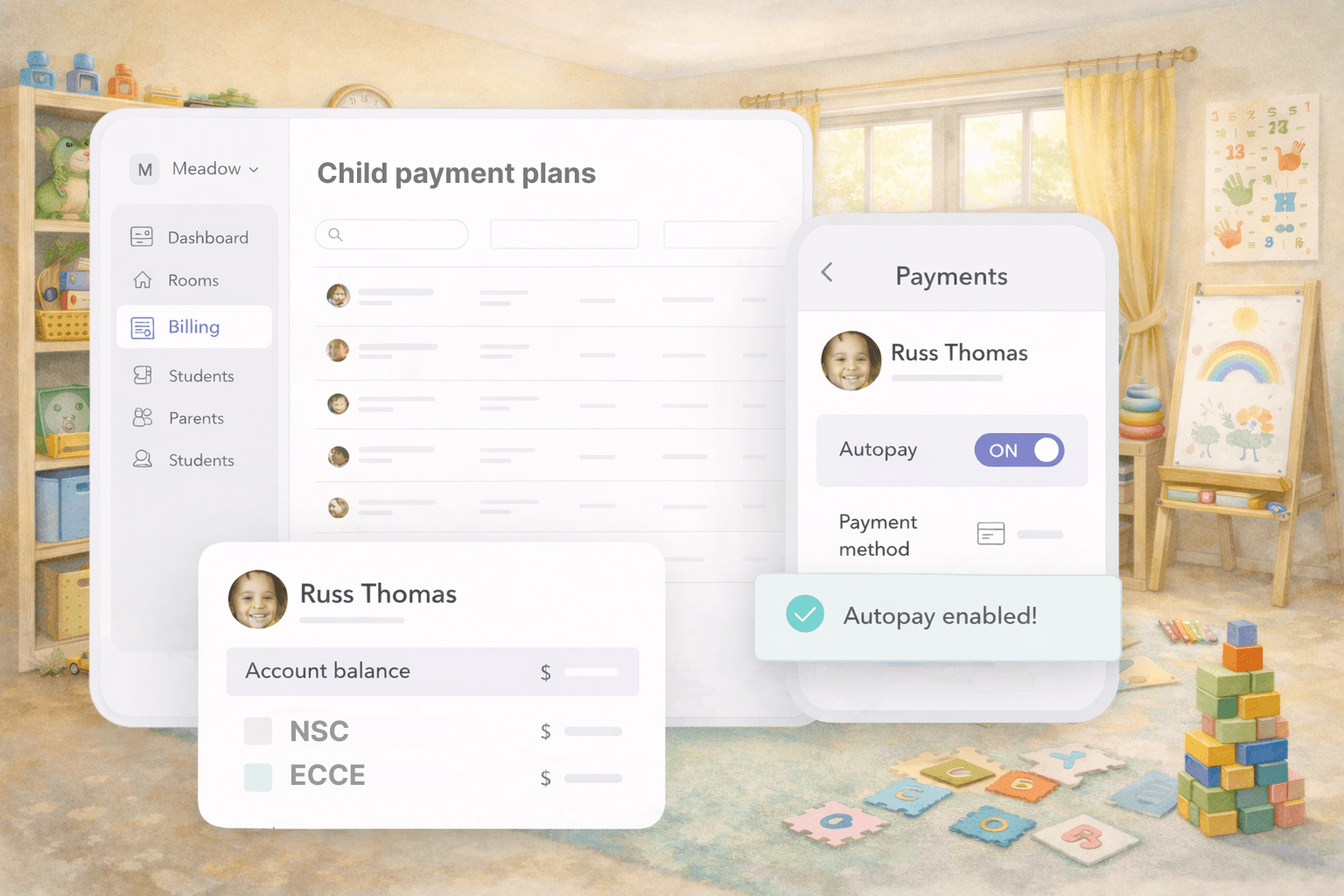
Meadow folds ECCE into the way you already work. You set up your ECCE programme year — its service model, dates, capitation, and sessions — once. You enrol eligible children (Meadow checks they have what ECCE needs, like a date of birth and PPSN), and you tag the relevant session type as an ECCE session.
From then on, ECCE funding flows automatically onto each enrolled child's booking plan. The ECCE-tagged hours are recognised, and the live funding allocation shows ECCE, NCS, and private hours side by side — so the September pile-up becomes a glance instead of a guess. And if a child has ECCE-tagged hours booked but no programme year set up yet, Meadow flags it clearly, so no child's hours quietly go unfunded.
Less reconciliation, fewer rejected registrations, and a term start you can actually look forward to.
Getting ready for the next ECCE year? See how Meadow handles ECCE or book a walkthrough.
This is general guidance. Always confirm current eligibility dates, capitation rates, and programme rules through the official ECCE channels.